
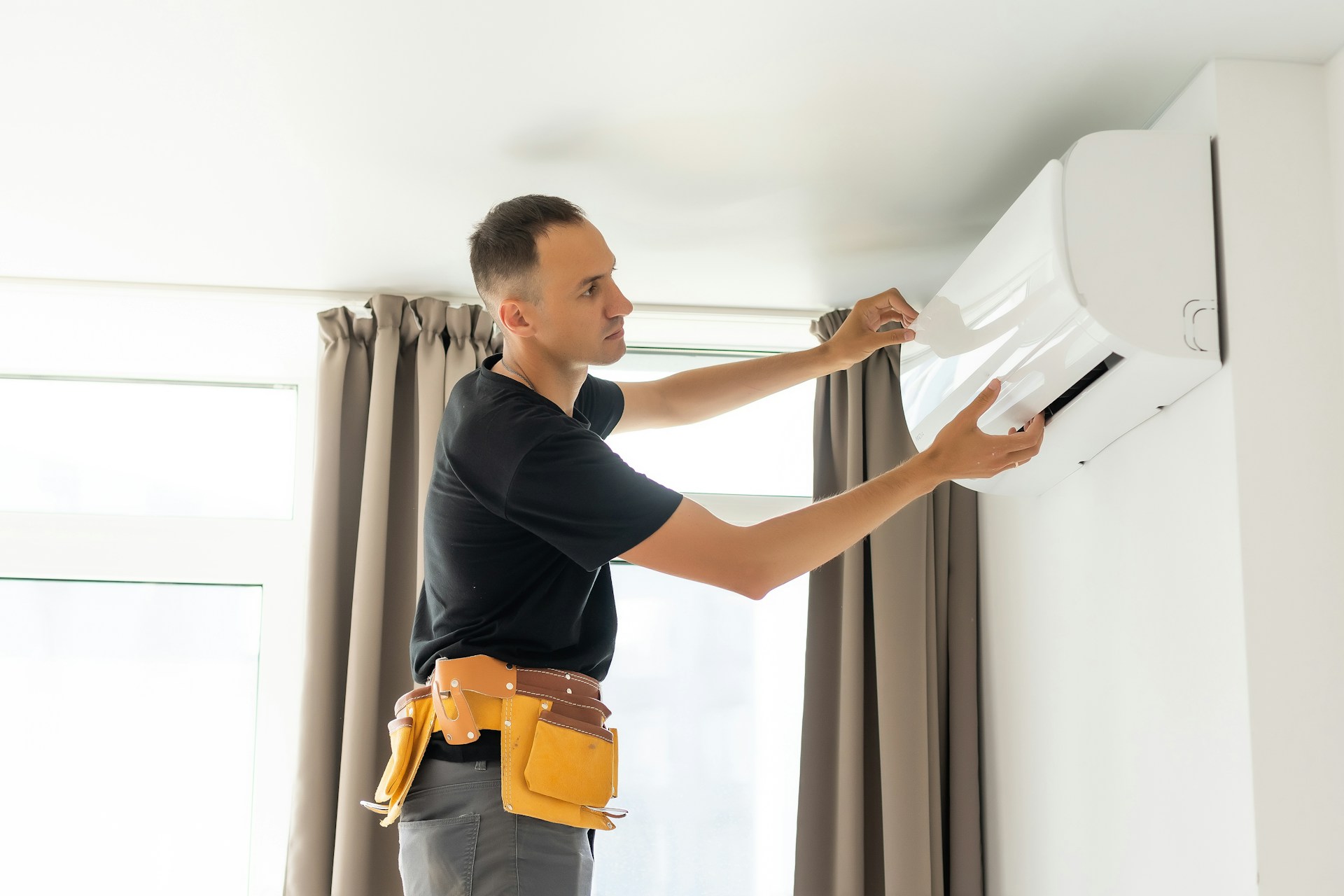
Early Spring AC Start-Up in Los Angeles: Fix First-Day Issues
- March 15, 2026
Get Your AC Ready Before Los Angeles Heats Up
If your AC is not cooling on the first really warm day, it can be stressful fast. Early spring in Los Angeles is the perfect time to test your system before we get those long, hot afternoons that never seem to cool down. A quick start-up check now can save you from sweaty, sleepless nights later.
After sitting for months, your air conditioner can be a little stubborn. Dust settles on parts, moving pieces can get sticky, and small electrical hiccups can pop up. On top of that, simple setting mistakes at the thermostat are very common. The good news is that many first-day problems follow the same pattern, and you can walk through a simple mental flowchart to see what’s going on.
We will walk through what to check at the thermostat, what a tripped breaker might mean, what to think about if the airflow is weak, and how to react to strange noises or smells. We will also point out the clear signs that it is time to stop guessing and bring in a professional HVAC team before real heat hits Los Angeles.
Start at the Thermostat Before You Panic
When your AC is not cooling, the thermostat is the first place to look. It controls when your system runs, how long it runs, and how cool your home gets. One small setting can make it seem like the whole system has failed.
Check these basics first:
- Make sure the thermostat is set to Cool, not Heat or Off
- Set the temperature a few degrees below the current room temperature
- Set the fan to Auto or On, not Off
- Look for a low battery icon, dim screen, or blank screen
Many people leave their thermostat on a winter setting without thinking about it. Others forget that spring brings longer daylight hours, so the old schedule does not match their daily routine anymore. Smart thermostats can also slip into Eco or Away modes that hold the temperature higher to save energy, which can feel like your AC is not cooling enough.
Some fixes are simple and safe:
- Changing the batteries
- Adjusting modes and schedules
- Reconnecting Wi-Fi so smart features work correctly
If the thermostat shows error codes, the system turns on and off very quickly, or you suspect miswiring, that is different. Those are signs you should stop guessing and let a technician inspect the controls and wiring so you do not damage the equipment.
When Your AC Will Not Turn On at All
If nothing happens when you lower the thermostat, it feels like a full breakdown. Before you assume the worst, there are a few basic checks you can do safely.
Work through this simple flow:
- Check that the indoor unit switch is On. Many systems have a light switch near the furnace or air handler that can be bumped off.
- If you can safely see the outdoor unit, make sure any service disconnect is set to On.
- Look at your main electrical panel for a tripped breaker labeled AC, Air Conditioner, or similar.
If you find a tripped breaker, reset it once by flipping it fully off, then back on. Then listen. Does the system start and stay on? If it trips again right away, or if you hear humming but no fan, something deeper is going on.
A breaker trip can point to:
- An overloaded circuit
- A short in wiring
- A motor that is struggling to start
- Dust and grime putting extra strain on parts
It is not safe to keep flipping a breaker back on over and over. That repeated stress can damage your system and puts your home at risk. If the breaker will not stay on, if you smell burning, or if nothing happens at all after a single reset, stop there and get a licensed HVAC pro involved before the heat really sets in.
Weak Airflow and Rooms That Still Feel Warm
Sometimes the AC is running, but the house still feels sticky and warm. The vents may be blowing a little air, but not enough to feel comfortable. Weak airflow can make it feel like the AC is not cooling even when the temperature is slowly dropping.
Start with a few simple spring checks:
- Replace or clean the air filter if it has been sitting all season
- Make sure all supply vents are open, not closed or covered
- Move furniture, curtains, or rugs away from return grilles
- Listen to the indoor blower to see if it sounds normal or weaker than usual
A clogged filter is one of the most common early season problems. It chokes off the air your system needs, which can cause the indoor coil to get too cold and even start to ice up. That ice will cut airflow even more and can damage the system if it keeps building.
If you notice:
- Ice on the indoor coil or refrigerant lines
- Very low airflow even with a fresh filter
- Air that feels warm or barely cool from the vents
then it is time to bring in a professional. These signs can point to blower motor problems, duct leaks, or low refrigerant. Those are not DIY issues and should be handled by a licensed HVAC technician who can safely test and correct the system.
Strange Noises, Bad Smells, and Other Red Flags
The first time your AC starts in spring, it might sound a little different for a minute. Sometimes you will hear a brief rattle as dust shakes loose, or a quick whoosh as the system gets going. Short, one-time noises that settle down usually are not a big concern.
Ongoing or loud noises are another story. Pay attention if you hear:
- Grinding or scraping, which can mean worn bearings or parts rubbing
- Screeching, which may point to a struggling motor or fan
- Banging or clanking from the outdoor unit, which can signal loose or broken components
Smells matter too. A light, dusty or burnt odor at first startup can be normal and should fade quickly as dust burns off. But you should not ignore:
- Musty or damp odors that keep coming back, which can point to moisture or mold issues
- Sharp electrical or acrid smells, which can signal wiring or motor trouble
- Any gas-like odor, which calls for immediate attention and getting everyone to a safe place
If you hear grinding, screeching, or banging, or if a strong smell does not clear out fast, turn the system off. Waiting can turn a small repair into a major breakdown, especially once the long, hot stretch in Los Angeles kicks in. Spring is the best time to catch these problems while you still have some comfort wiggle room.
When to Call a Pro Before the First Heatwave
If your AC-not-cooling problem sticks around after basic thermostat checks, a single safe breaker reset, and a quick look at filters and vents, it is time to call in help. Do not wait for the first real heatwave to find out your system needed more than a battery change.
A professional spring tune-up and inspection can help:
- Improve energy use before the highest bills hit
- Support longer equipment life by catching strain early
- Keep indoor air cleaner by checking filters and system cleanliness
- Reduce the chances of sudden breakdowns on the hottest days
At Season Control Heating and Air Conditioning, we work with homes across Los Angeles, so we know how hard AC systems work here most of the year. A thoughtful early spring check from a trained technician can give you peace of mind, help your equipment run more smoothly, and keep you comfortable from the first warm afternoon through the last hot evening.
Restore Reliable Comfort To Your Home Quickly
If you are dealing with an AC not cooling, our team at Season Control Heating and Air Conditioning is ready to diagnose the problem and get your system running right. We focus on accurate repairs, honest recommendations, and solutions that last. Reach out today so we can schedule a convenient visit and bring your home back to a comfortable temperature. If you prefer to message us directly, you can contact us to get started.